
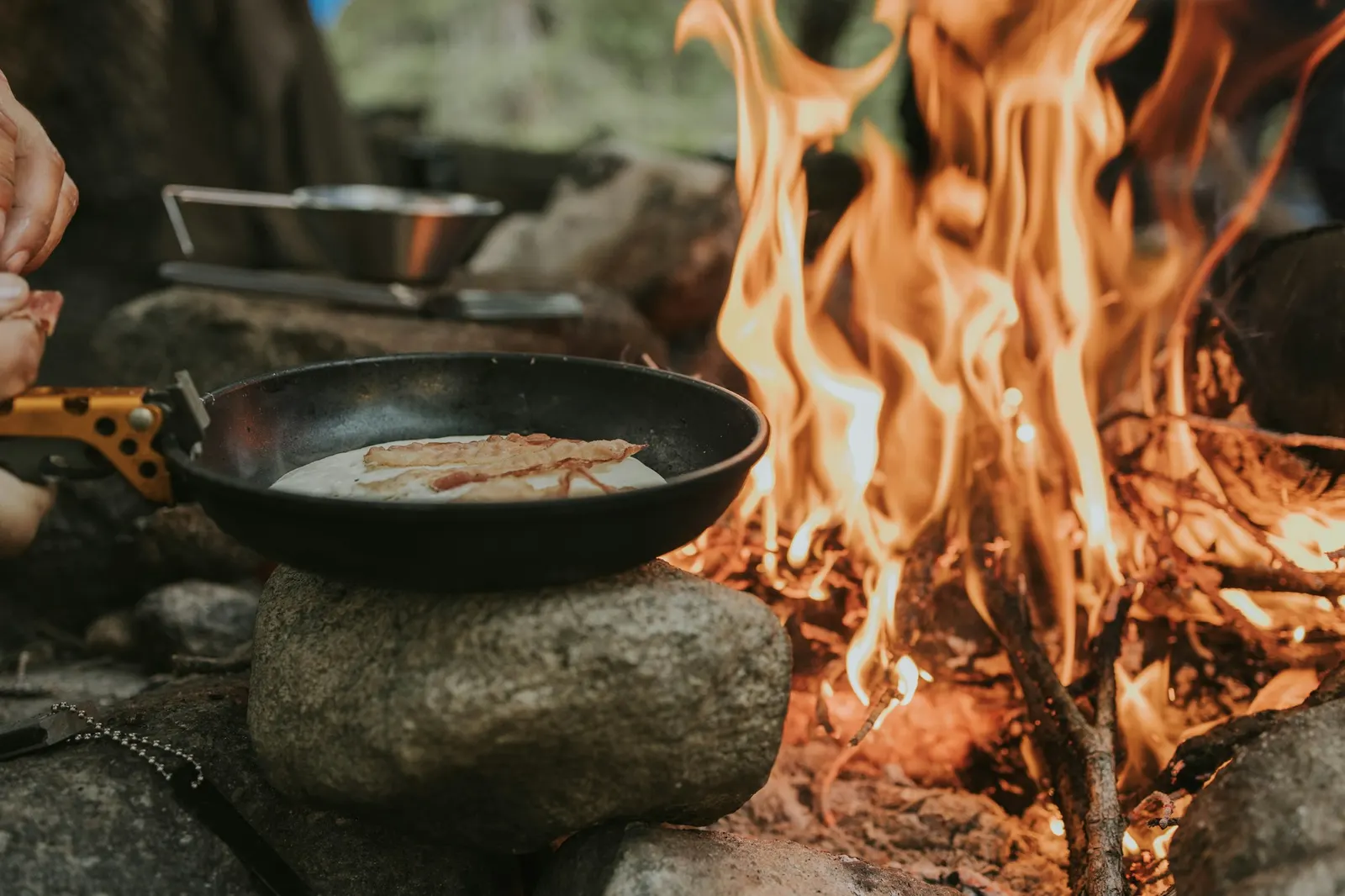
One of the big advantages of canoe camping is that you can eat well. Unlike backpacking, you are not counting every gram, so fresh food, real coffee and the occasional luxury are all possible. Still, food is often the heaviest and bulkiest part of your load. A simple, repeatable planning system helps you bring enough without hauling extras across every portage.
Step 1: Count meals, not days
Start by listing every meal you will eat on the trip. A "three-day trip" might actually be lunch on day one through lunch on day three — that is two breakfasts, three lunches and two dinners. Writing it out avoids the classic mistake of packing three of everything.
Then add:
- Snacks for every day, including travel days.
- One emergency meal per person, in case wind or weather delays your return.
- Drinks: coffee, tea, hot chocolate, drink mixes.
Step 2: How much food?
Active days of paddling and portaging burn a lot of energy. A common planning guideline for canoe trips is around 0.7 to 1 kilogram of food per person per day, with higher amounts in cold weather or for long, hard days. Calorie-dense foods — nuts, cheese, oils, chocolate — help you keep weight reasonable.
Your own needs will vary. After each trip, note what came home uneaten and what ran out, and adjust next time.
Step 3: Build a menu with templates
Templates make planning fast. Pick a base for each meal type and rotate ingredients.
| Meal | Template | Example ideas |
|---|---|---|
| Breakfast | Hot grain + fruit + protein | Oatmeal with dried fruit and nuts; pancakes with bacon on day one; granola with powdered milk |
| Lunch | Wrap or cracker + spread + crunch | Tortillas with hard cheese, salami and peppers; crackers with nut butter and apple |
| Dinner | Starch + sauce + protein + veg | Pasta with dehydrated sauce; rice and lentil curry; couscous with spiced chickpeas |
| Snacks | Salty + sweet + energy | Trail mix, jerky, chocolate, energy bars |
Plan the freshest, heaviest meals for the first day or two — frozen steak, sausages, fresh vegetables. Save dehydrated and shelf-stable meals for later in the trip. Your load gets lighter quickly, and nothing spoils.
Step 4: Repackage and label
Repackaging reduces weight, bulk and garbage. It is also required in parks with can-and-bottle bans.
- Remove all boxes and extra packaging.
- Measure each meal into its own bag, labelled with meal name, day and cooking instructions.
- Add spices and small items in tiny containers or folded paper inside each meal bag.
- Group bags by day for easy access. Our barrel packing guide explains the day-by-day system.
Step 5: Plan around the stove
Even where fires are allowed, a stove is the dependable workhorse of camp cooking. Fire bans can come into effect suddenly, and wet wood can make fire cooking slow. Plan meals that work on a stove; treat fire cooking as a bonus. See campfire bans and rules.
Fuel planning
Fuel use depends on your stove, the weather, altitude and how much water you boil. Track your use on short trips to build your own estimate. Bring a little extra in cold weather and when you need to boil water for treatment.
Simple cook kit
- One or two pots with lids, plus a small frying pan if you like pancakes.
- Long-handled spoon and spatula.
- Mugs and bowls for each person.
- Lighter and waterproof matches.
- Small cutting board and knife.
- Biodegradable soap, a scrubber and a small strainer.
Plan the meal you'll want at 7 p.m. after a windy crossing — warm, filling and ready in twenty minutes.
Cooking and eating in bear country
Set your kitchen well away from the tent, downwind if possible. Cook only what you will eat, and store all food and scented items properly as soon as you finish. Avoid particularly smelly foods like fish frying near your sleeping area. Our bear safety guide goes into detail.
Clean-up without a trace
- Scrape pots clean and eat the leftovers, or pack them out.
- Wash dishes at least 70 metres from the water with a small amount of biodegradable soap.
- Strain dishwater through a fine strainer, pack out food bits and scatter the grey water widely.
- Never wash dishes or bathe directly in lakes or streams.
Sample three-day menu
- Day 1 — Lunch: sandwiches from home. Dinner: thawed steak or sausages with fresh vegetables and potatoes.
- Day 2 — Breakfast: pancakes with maple syrup. Lunch: tortillas with cheese and salami. Dinner: pasta with dehydrated tomato sauce and parmesan.
- Day 3 — Breakfast: oatmeal with dried fruit and nuts. Lunch: crackers, nut butter and an apple.
- Every day: trail mix, chocolate, tea and coffee.
Water for cooking and drinking
On lake trips, water is everywhere, but all of it should be treated before drinking. Plan water into your meal routine so it never becomes a scramble.
- Boiling for meals: water you bring to a rolling boil for pasta, rice or hot drinks is safe to use, which reduces the amount you need to filter.
- Filter a batch at camp: as soon as you arrive, fill a collapsible container and filter enough for dinner, the evening and breakfast.
- Collect away from shore: paddle out a short distance and collect from clear, deeper water rather than near a busy landing.
Treats and small luxuries
Because canoe trips allow a little extra weight, small treats make a big difference to morale. Consider real maple syrup for pancakes, a block of good cheese, a bag of popcorn kernels, fresh garlic or a small bottle of hot sauce. On the last night, a special dessert — bannock with jam, or chocolate fondue in a small pot — turns an ordinary evening into a celebration. Keep treats sealed and stored with the rest of your food.
Key takeaways
- Count meals, not days, and add an emergency meal.
- Use simple templates for each meal type.
- Eat fresh food first and dry food later.
- Repackage, label and group meals by day.
- Plan around a stove so fire bans never ruin dinner.
Meal planning FAQ
Do I need a cooler on a canoe trip?
Usually not for short trips. Freezing first-night meals and keeping the barrel in the shade is enough for a day or two. Soft coolers can work for longer trips with fewer portages.
What about dietary needs?
Templates make it easy to swap ingredients for vegetarian, gluten-free or allergy-friendly options. Label allergy-safe meals clearly.