
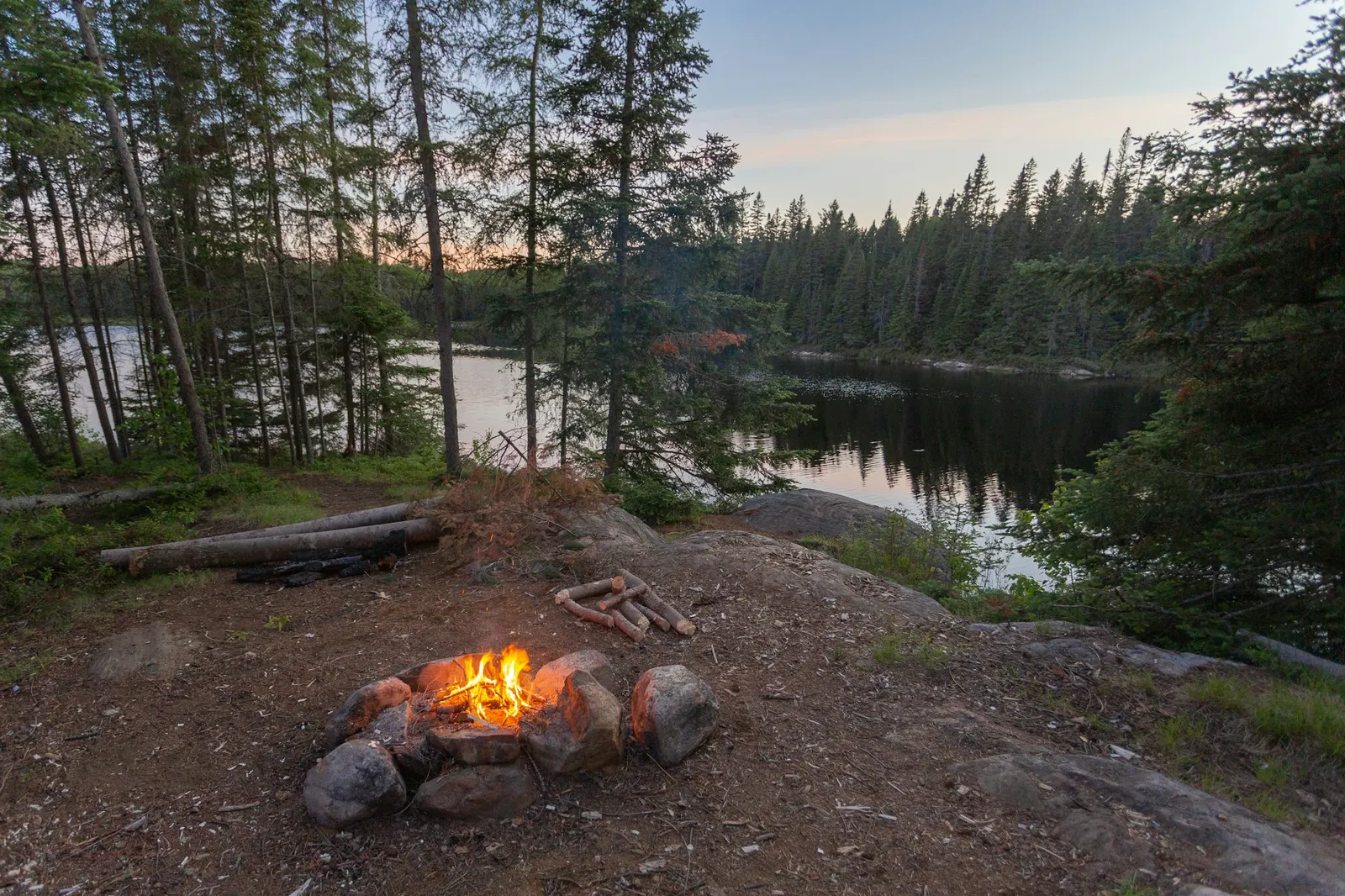
Few things feel more like camping than a crackling fire by the lake. But wildfire is a serious and growing concern across Canada, and fire restrictions have become a normal part of summer. Knowing how fire bans work, where to find current information and how to manage a fire responsibly protects forests, communities and you.
Who issues fire bans?
Fire restrictions in Canada are issued by several levels of authority, and more than one may apply to your campsite at the same time:
- Provincial and territorial governments: each has a wildfire or forestry agency that can declare restricted fire zones or prohibitions across large areas.
- Parks Canada: each national park can issue its own fire bans or restrictions.
- Provincial parks: parks may follow provincial restrictions or set their own.
- Municipalities: may have bylaws for private campgrounds and properties within their boundaries.
Restrictions vary. A full fire ban usually prohibits all open fires, including campfires in designated pits. Partial restrictions may allow fires only in certain campgrounds or at certain times of day. Portable stoves are often still allowed, but even those can be restricted in extreme conditions.
Fire restrictions can be issued or lifted with little notice as conditions change. Check the day you leave, and check again on-site — look for signs at park gates, campground offices and backcountry access points.
Where to check
- The park's official page for current alerts, including fire bans.
- Your provincial wildfire agency for regional restrictions and active fires.
- Campground staff and signage on arrival.
- Outfitters often know current conditions in the parks they serve.
In the backcountry, you may be out of contact when conditions change. If in doubt, assume fires are not permitted and rely on your stove.
Building a responsible fire (when permitted)
Use existing fire pits
Only build fires in designated fire pits or rings. Never build a new ring. At backcountry sites, use the existing ring even if it is not where you would have chosen.
Clear the area
Remove dry leaves, needles and twigs from around the fire pit. Keep the tent, tarp and gear well away. Watch for overhanging branches.
Use the right wood
- Use local or park-sold firewood. Moving firewood can spread invasive pests like the emerald ash borer and spongy moth; many parks prohibit bringing outside firewood.
- In the backcountry, gather only dead and down wood no thicker than your wrist, and only where permitted.
- Never cut living trees or strip bark from birches.
Keep it small
A small fire is easier to control, uses less wood and is safer. Keep flames low and do not leave a fire unattended, even for a few minutes.
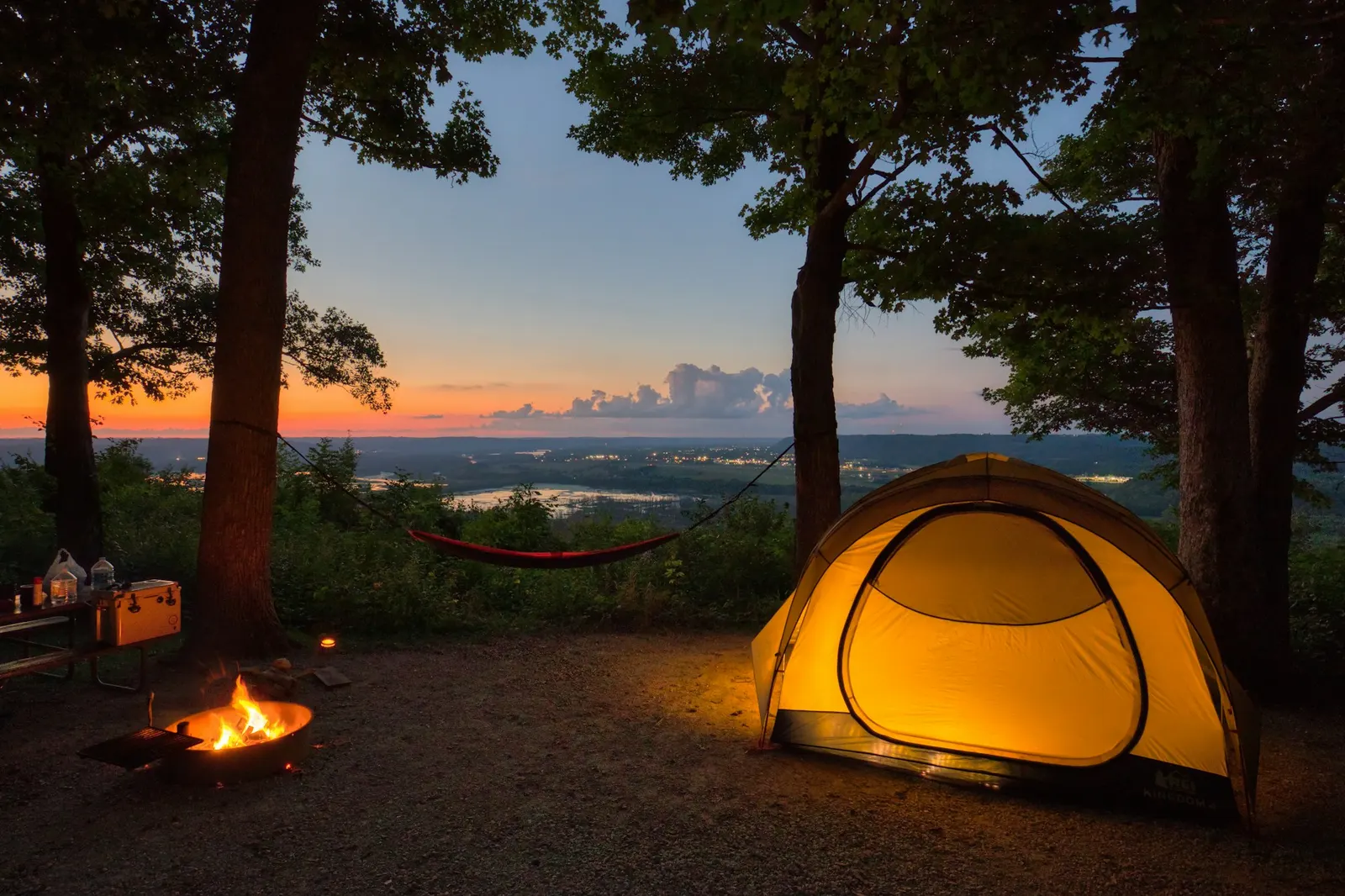
Putting a fire out properly
A fire is not out until it is cold. Many wildfires start from campfires that seemed out but were smouldering underground.
- Let it burn down to ash well before you plan to leave or go to bed.
- Drown it with plenty of water, not just a splash.
- Stir the ashes and embers with a stick to expose hidden hot spots.
- Drown again and repeat until there is no steam or hissing.
- Feel the ashes carefully with the back of your hand held close above. If it is still warm, keep going.
Drown, stir, drown, feel. If it's too hot to touch, it's too hot to leave.
Cooking without a fire
A fire ban does not have to change your menu much if you plan for a stove. In fact, many trippers use stoves for almost all cooking: they are faster, cleaner and leave no trace.
- Canister stoves: light and convenient for most trips; performance drops in cold weather.
- Liquid-fuel stoves: reliable in cold weather and good for larger groups.
- Two-burner camp stoves: ideal for drive-in campgrounds.
Always use stoves on a stable, non-flammable surface, away from tents and tarps, and never inside a tent. Check whether your stove has an on/off valve — in some extreme conditions, only stoves with shut-off valves may be allowed. Our meal planning guide includes stove-friendly menus.
Making camp cozy without flames
A fire ban can feel like a loss, but evenings without a fire have their own magic. Bring warm layers, a lantern or string lights, and a thermos of hot chocolate. Stargazing is far better without a fire's glare, and you will hear more of the night: loons, owls and the lap of water against rock.
Campfire smoke and your neighbours
Even when fires are allowed, smoke drifts. In busy campgrounds, a smoky fire can fill a neighbour's tent or tarp. Burn only dry, seasoned wood, keep the fire small and let it die down at a reasonable hour. Never burn garbage, plastics or food packaging; they create toxic smoke, rarely burn completely and leave residue that attracts wildlife.
Teaching kids fire safety
Fires fascinate children, so make safety part of the fun. Set a clear "no-go" ring around the fire pit, supervise every marshmallow-roasting session, and give older children the job of helping drown and stir the fire at the end of the night. Kids who learn these habits early become careful, confident campers.
If you see a wildfire
If you see smoke or flames that are not a contained campfire, move to a safe location and report it right away to the provincial wildfire reporting line, park staff or 911. Note your location, the size of the fire and the direction of smoke. Do not try to fight a wildfire yourself.
Key takeaways
- Check fire restrictions from the park and province before you leave and on arrival.
- Use existing fire pits, local firewood and keep fires small and attended.
- Drown, stir, drown and feel until the fire is cold.
- Always carry a stove so a fire ban never ruins dinner.
Campfire FAQ
Can I have a fire on the beach during a ban?
No. A fire ban usually applies to all open fires regardless of location, including beaches. Follow the specific wording of the ban.
Are propane fire pits allowed during bans?
It depends on the restriction and the jurisdiction. Some bans allow certain approved devices; others do not. Check the specific rules for your park and province.