
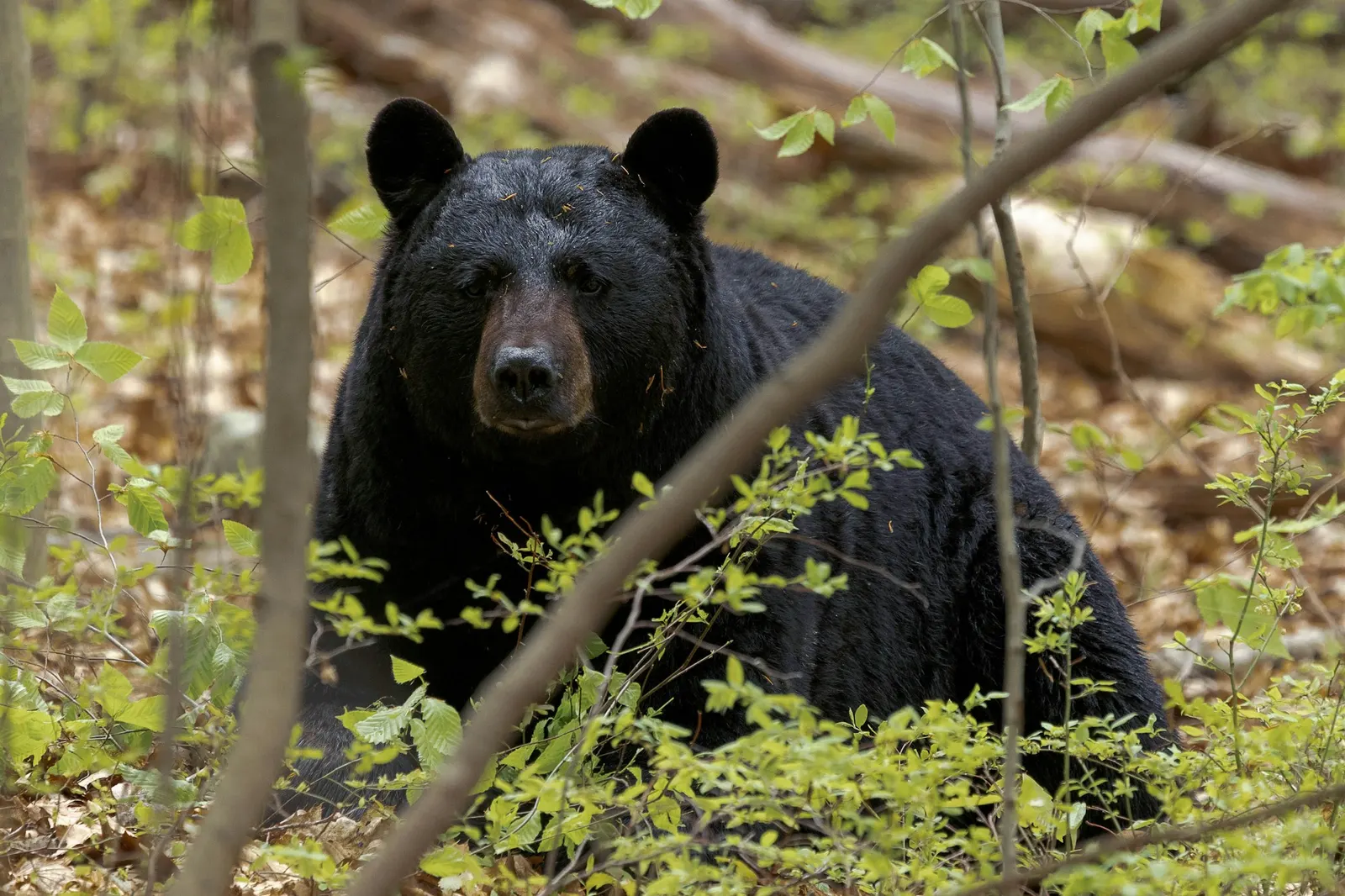
Almost every park in Canada is bear country. Black bears live in forests from Newfoundland to British Columbia, and grizzly bears roam the western mountains and the North. The good news is that serious bear incidents are rare, and most encounters end with a bear moving off on its own. The habits below help keep it that way — for you and for the bears.
Know your bears
Telling species apart helps you understand risk and respond appropriately, but colour is not a reliable clue: black bears can be brown, cinnamon or even blond, and grizzlies range from light brown to almost black.
| Feature | Black bear | Grizzly bear |
|---|---|---|
| Shoulder | No prominent hump | Distinct muscular shoulder hump |
| Face profile | Straight, "Roman" nose | Dished or concave face |
| Ears | Taller, more pointed | Shorter, rounder |
| Claws | Short, curved, good for climbing | Long, straighter, often visible |
| Range | Most forested parts of Canada | Western mountains, BC, Alberta, the North |
Prevention: the real secret to bear safety
Most problems start with food. A bear that gets a reward from a campsite learns to return, and "food-conditioned" bears often have to be relocated or destroyed. Preventing that first reward is the most important thing campers can do.
Storing food properly
- Use what the park provides: food lockers, bear poles or cable systems at many backcountry sites.
- Frontcountry: store food, coolers and cooking gear in a hard-sided vehicle or the campground's food locker, not in a tent or soft-top vehicle.
- Backcountry: use a bear-resistant container or barrel, or hang food at least four metres off the ground and well away from the trunk.
- Everything scented counts: toothpaste, sunscreen, lip balm, garbage and pet food go into storage too.
Keeping a clean camp
- Cook and eat well away from your tent, ideally downwind.
- Do not sleep in clothes you cooked in.
- Strain dishwater and pack out food particles; scatter grey water far from camp and water sources.
- Never burn food scraps or garbage in the fire pit — they rarely burn completely and leave smells behind.
Feeding bears, or leaving food where they can get it, is illegal in national parks and many provincial parks and puts the animal at serious risk. A fed bear is often a dead bear.
On the trail and on the portage
Surprising a bear at close range is the situation most likely to end badly. Make it easy for bears to know you are coming.
- Make noise, especially near streams, in dense brush, on blind corners and in wind.
- Travel in groups and keep children close.
- Watch for signs: fresh scat, tracks, overturned rocks, torn-up logs and digging.
- Keep dogs on a leash; an off-leash dog can lead an angry bear back to you.
- Respect closures and warnings posted by park staff.
Carrying and using bear spray
Bear spray is a capsaicin-based deterrent designed to stop an approaching or attacking bear. Parks Canada recommends carrying it in many areas. It is effective only if you can reach it and use it quickly.
- Carry it on your body: a hip holster or chest strap, not buried in your pack.
- Know how it works: practise removing the safety clip; inert practice canisters are available.
- Check the expiry date and replace old canisters.
- Use it at close range: aim slightly downward toward an approaching bear's face and adjust for wind.
- Travel rules: bear spray is generally not allowed on commercial flights; check transport rules and buy it near your destination if needed.
If you encounter a bear
Every encounter is different, and park agencies publish detailed guidance. The general principles are widely shared:
The bear has not noticed you
Back away quietly and leave the area, giving the bear plenty of space. Detour widely or wait for it to move on.
The bear has noticed you
- Stay calm. Do not run — bears can easily outrun people.
- Speak in a calm, firm voice so it knows you are human.
- Pick up small children and keep your group together.
- Back away slowly, keeping the bear in sight. Have your bear spray ready.
If a bear approaches or makes contact
Responses differ depending on whether the bear is acting defensively (surprised, protecting cubs or food) or appears predatory or curious and persistent. Defensive encounters are more often associated with grizzlies; predatory behaviour, while rare, is more often associated with black bears. Use bear spray when the bear is close. Learn the specific guidance from Parks Canada or your provincial park authority before your trip — it is worth reading twice.
Bear safety is mostly boring: clean dishes, stored food, a bit of noise on the trail. Boring is exactly what you want.
Bear safety at a canoe campsite
Canoe trips bring special bear considerations. You often carry more food than backpackers, and campsites on popular routes see heavy use. A few habits help:
- Arrive and scan: when you land, look for signs of recent bear activity — scat, tracks, torn logs — and report anything unusual later.
- Set up the kitchen first on open rock or shoreline, well away from the tent pads.
- Choose a storage spot early: use the provided system, or pick a hang tree or barrel location before dark.
- Secure the canoe upside down well above the waterline, away from the food storage area.
- Islands are not bear-proof: bears are strong swimmers and visit islands regularly.
Reporting sightings
Report bear sightings, especially near campgrounds or bears showing bold behaviour, to park staff. Your report helps them manage risks for other visitors and the bear.
Key takeaways
- Store all food and scented items properly every time, day and night.
- Cook away from your tent and keep a scrupulously clean camp.
- Make noise on trails and portages to avoid surprise encounters.
- Carry bear spray where recommended, on your body, and know how to use it.
- Read official encounter guidance from the park you are visiting.
Quick FAQ
Do bear bells work?
Bells are often too quiet to alert bears in time, especially near running water or in wind. Talking, calling out and clapping are generally more effective.
Is it safe to camp in bear country with children?
Yes, with sensible precautions. Teach children why food stays out of the tent, keep them within sight, and make bear safety part of the camp routine. Our meal planning guide includes tips on reducing food smells.