
Ask any Canadian camper about bugs and you will get a story. The northern forest is famously generous with biting insects, especially in late spring and early summer. But bugs do not have to ruin a trip. Understanding when each one peaks, what attracts them and how to protect yourself turns bug season from an ordeal into a minor nuisance.
Meet the usual suspects
Blackflies
Small, dark flies that breed in running water. In Ontario and Quebec they typically peak from late May through June, earlier in southern areas and later further north. They are active during the day, especially on calm, overcast mornings, and like to crawl into hairlines, cuffs and collars. Their bites can swell and itch for days.
Mosquitoes
Mosquitoes breed in still water and are usually at their worst in June and July, though they can linger into late summer in wet years. They are most active at dawn and dusk and in shaded, sheltered spots with no wind.
Deer flies and horse flies
Larger, fast flies that tend to arrive in July. They are active on warm, sunny days, circle your head and deliver a sharp bite. They are often attracted to movement and dark colours, and are common on portages and forest trails.
No-see-ums
Tiny biting midges small enough to pass through some standard mesh. They are often active on calm evenings near water.
Timing is your best weapon
If you have flexibility, the easiest way to avoid bugs is to camp when they are fewer:
- Late August and September: generally the lowest bug pressure of the open-water season in much of central and eastern Canada.
- Windy, open sites: a breeze keeps mosquitoes and blackflies down. Points and islands are often far better than sheltered bays.
- Midday on the water: bugs are rarely a problem in the middle of a lake.
If your trip falls in peak season, plan to be on the water during the worst bug hours and set up camp on exposed, breezy sites.
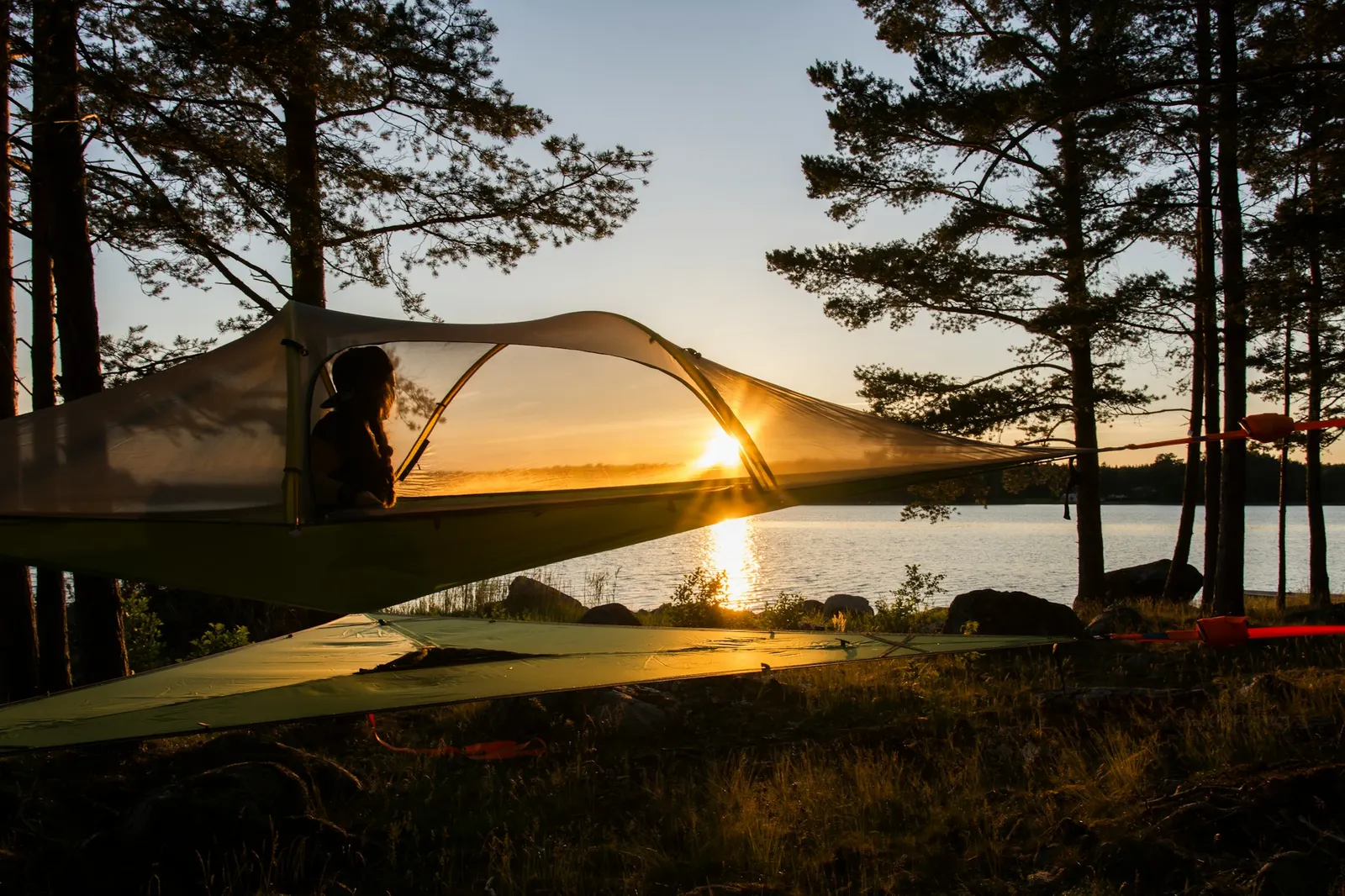
When you have a choice of sites, pick one on a point or rocky island with a view of open water. That breeze is the most effective — and quietest — bug repellent you will ever have.
Clothing: your first line of defence
Covering up works better than any spray.
- Light-coloured, loose, long clothing: mosquitoes bite through thin, tight fabric; loose layers keep them at a distance.
- Tuck and seal: pants into socks and shirts into pants keep blackflies from crawling in.
- Bug jacket or head net: a mesh jacket with a hood and face net is inexpensive and extremely effective during blackfly season.
- Gloves and a brimmed hat: the brim keeps the head net away from your face.
- Permethrin-treated clothing: available in Canada; follow label directions and never apply permethrin products directly to skin.
Choosing a repellent
Health Canada regulates insect repellents, and approved products carry a registration number on the label. Common active ingredients include:
- DEET: long track record and broad effectiveness. Concentrations and age limits for children are set out on the label and in Health Canada guidance.
- Icaridin (picaridin): effective, nearly odourless and less likely to damage plastics and synthetic fabrics.
- Other approved actives: some products use plant-based ingredients; check the label for protection times, which are often shorter.
Always read and follow the label, especially for children. Apply sunscreen first, then repellent, and wash it off before bed.
Bugs are a timing problem, a clothing problem and a campsite problem — solve all three and you will barely notice them.
Building a bug-smart camp
- Choose an open site with a breeze and few nearby wetlands.
- Pitch the tent quickly and keep the door zipped. Get in and out fast.
- Use a bug shelter: a screened tarp or mesh shelter over your kitchen makes evenings bearable during peak season.
- Cook before dusk so you are finished before mosquitoes reach full force.
- Before bed, hunt down invaders inside the tent with a headlamp.
Bugs on the water and on the portage
Bug pressure changes dramatically as you move through a trip. Open water with a breeze is usually the most comfortable place to be, while portages through wet, sheltered forest can be the worst. Before a portage in peak season, put on your bug jacket or head net while still in the canoe, apply repellent to exposed skin and keep moving steadily. Deer flies tend to target the highest moving point, so some paddlers stick a patch of sticky tape to the back of their hat to catch them.
Bugs and kids
Children are often more bothered by bites than adults. Bug jackets with built-in head nets, light long clothing and closed footwear help a lot. Check repellent labels carefully for age restrictions, and keep a bug-free retreat — a screened shelter or the tent — for when everyone needs a break. Our paddling with kids guide has more family tips.
Bites happen: treatment basics
Even with care, you will likely get some bites. Avoid scratching, which can cause infection. A cold cloth, an over-the-counter anti-itch cream or an oral antihistamine may help; ask a pharmacist what is suitable for you or your children. Watch for signs of allergic reaction, such as swelling far beyond the bite, difficulty breathing or dizziness, and seek medical help immediately if they occur.
Ticks are a different story
Blacklegged ticks, which can carry Lyme disease, are expanding their range in parts of southern Canada. Check yourself, your kids and pets for ticks daily, especially after walking through tall grass or brush, and remove any tick promptly with fine-tipped tweezers. Provincial public health websites have up-to-date maps of risk areas.
Key takeaways
- Blackflies peak in late spring, mosquitoes in early summer and deer flies in midsummer.
- Breezy, open campsites are the best natural defence.
- Cover up with loose, light clothing and use a bug jacket in peak season.
- Use Health Canada–registered repellents and follow the label.
- Check for ticks daily in risk areas.
Bug season FAQ
Does eating garlic or taking vitamin B keep bugs away?
There is no good evidence that diet changes protect you from bites. Stick with clothing, campsite choice and registered repellents.
Are bug zappers or citronella candles useful?
Their effect outdoors is limited, especially in wind. A screened shelter and good clothing are much more reliable.