
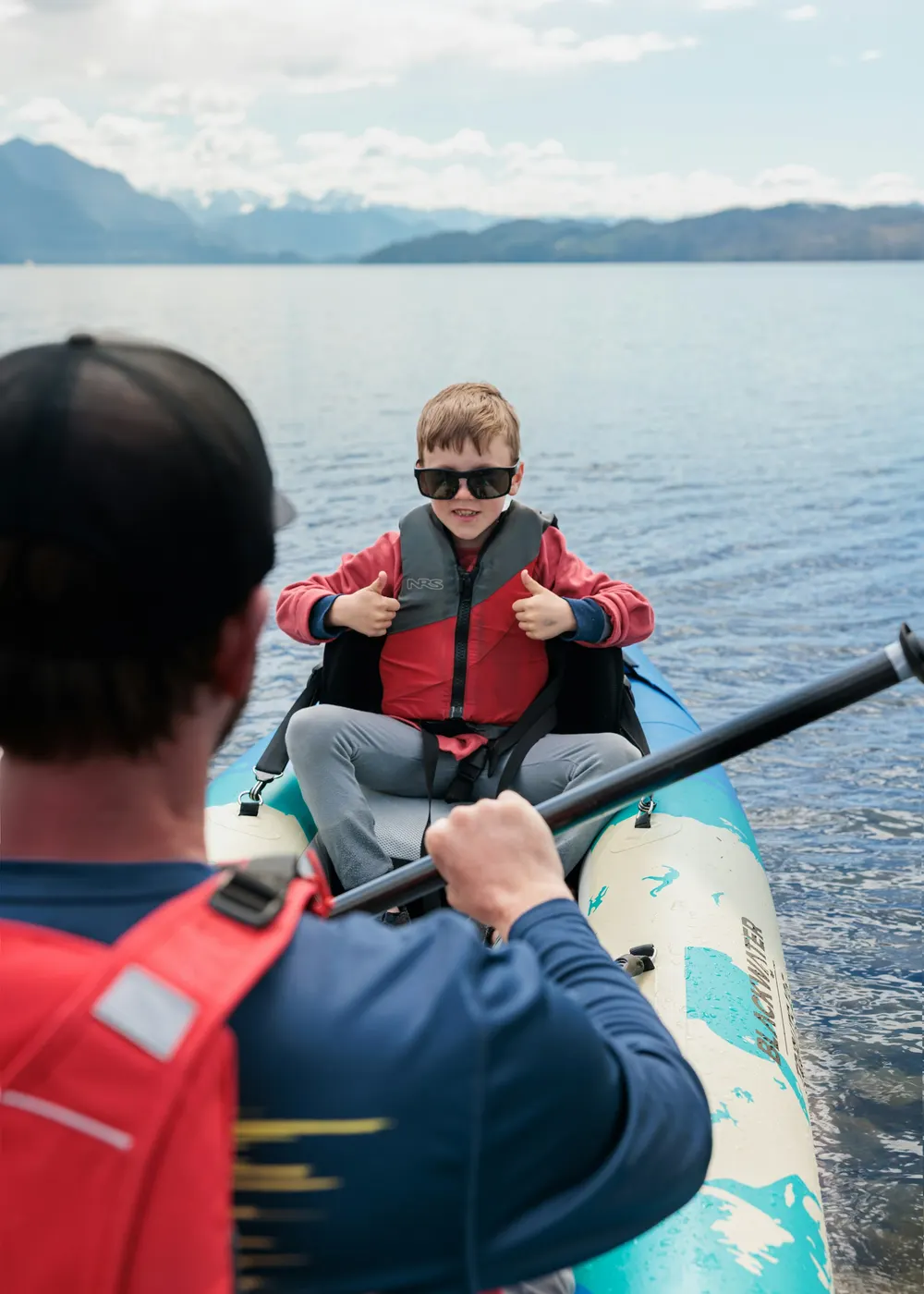
Sharing a canoe with a child is one of the great pleasures of Canadian lake country. Kids notice everything — the turtle on a log, the dragonfly on the gunwale, the way the paddle swirls the water. With a few adjustments to your planning, paddling with kids can be safe, relaxed and something they ask to do again. This guide focuses on canoes but most tips apply to kayaks too.
Safety first: the right lifejacket
Every person in a canoe, of every age, should wear a Canadian-approved lifejacket or PFD that fits. For children, fit is critical.
- Check the label: it shows the weight range and chest size the PFD is approved for.
- Infant and toddler PFDs: look for a large flotation collar to support the head, a grab strap and a crotch strap so it cannot slip off.
- Fit test: fasten it, then lift the child by the shoulders of the PFD. If it rides up past the chin or ears, it is too big.
- Practise at the beach: let kids float in their PFD in shallow water so they know how it feels.
- Wear it on the dock and shoreline too for young children and non-swimmers.
A child should sit in their own spot in the canoe, wearing their own PFD. If you capsize, a child held on a lap can be trapped or injured.
Where kids sit
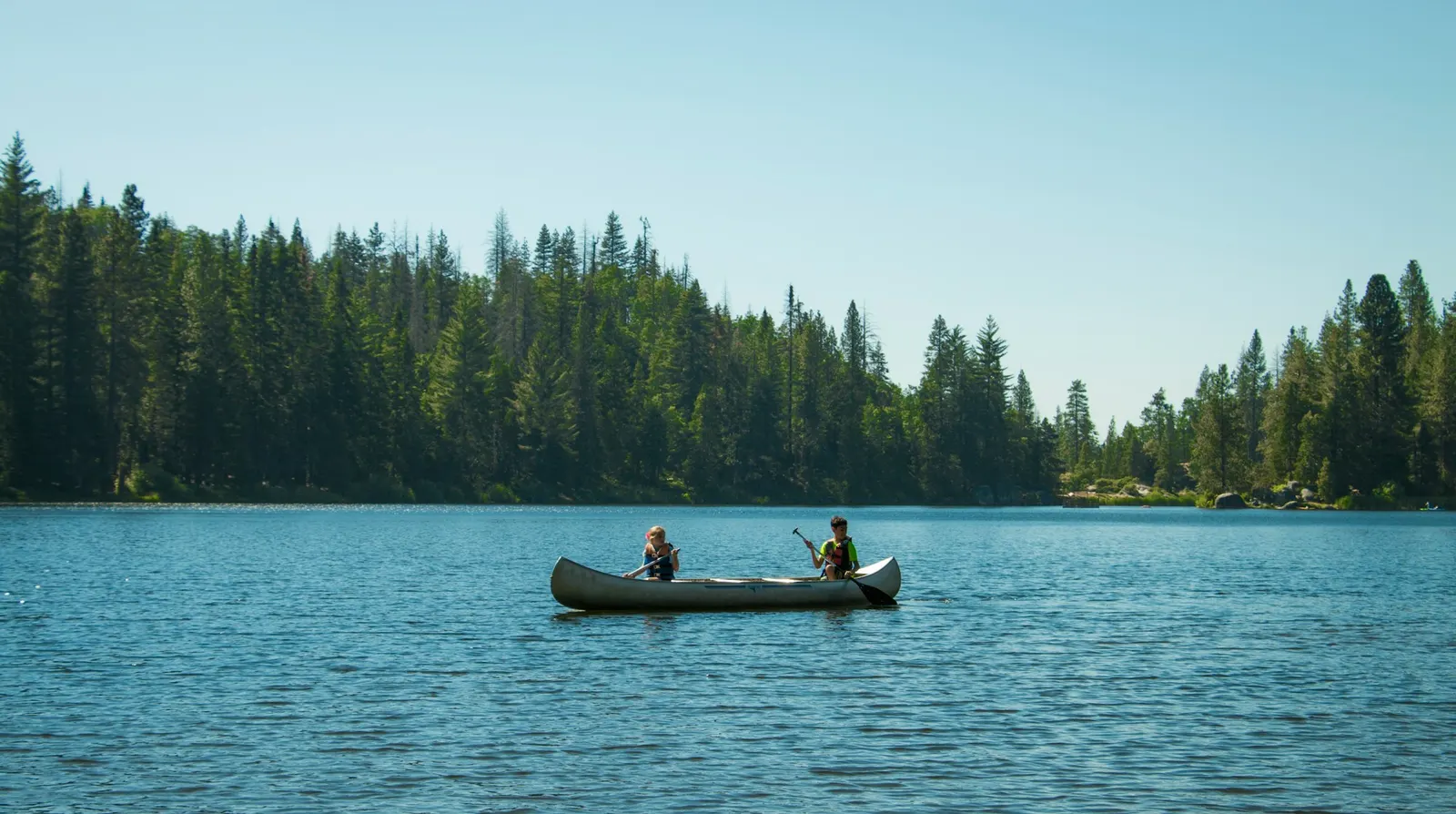
In a tandem canoe with two adults, a small child usually sits on the floor or a low seat in the middle, in front of the stern paddler. Sitting low keeps the canoe stable. Some families add a small kids' seat or cushion. For older children who want to paddle, a short child-sized paddle lets them join in — even a few strokes makes them feel part of the crew.
With one adult and an older child, the adult takes the stern for steering, and the child paddles bow. Keep expectations modest; the adult will do most of the work.
Choosing the right water
- Small, sheltered lakes and bays with lots of shoreline to explore.
- Short distances: plan an hour or two of paddling, with plenty of stops.
- Calm conditions: morning paddles are often calmer than afternoon. Avoid wind and big crossings.
- Few or short portages: see Portaging 101 for tips if you include one.
- Interesting destinations: a beach, a beaver lodge, an island, a waterfall.
Keeping kids comfortable
Warm and dry
Children sitting still in a canoe cool down faster than paddling adults. Bring extra layers, a warm hat, a rain jacket and a small blanket or sleeping pad for them to sit on. A full change of clothes in a dry bag is essential.
Sun protection
Water reflects sunlight, so use hats with brims, sunglasses with straps, long sleeves and sunscreen.
Bugs
Bug jackets and long clothing work well for children. Check repellent labels for age guidance. Our bug season guide has more.
Snacks and water
Keep snacks and water bottles within reach. A hungry child in a canoe is a short trip.
Measure success in smiles, not kilometres. The lake will still be there next summer.
Keeping kids engaged
- Give them a job: navigator with a map, wildlife spotter, or "bailer captain" with a sponge.
- Play games: I-spy, counting loons, or spotting the next portage sign.
- Stop often: swim stops, snack stops, rock-hopping and exploring islands.
- Bring small treasures: a magnifying glass, a small net, binoculars.
- Let them steer for a minute in calm water — with close supervision.
Teaching water skills
Teach children basic canoe safety in an age-appropriate way: stay low and centred, hold the gunwales when moving, and never stand up. Older children can practise strokes in shallow water. Swimming lessons and paddling courses offered through local clubs and organizations build confidence.
What to do if we tip
Explain calmly what to do in case of a capsize: hold on to the canoe, stay together and wait for an adult's instructions. Practising a controlled tip in warm, shallow water with experienced supervision can make the idea much less scary.
Family canoe camping
Once day paddles go well, a one-night canoe trip to a nearby site is a natural next step. Pick a site close to the access point, pack familiar food and comfortable sleeping gear, and plan a relaxed schedule. Our family camping weekends guide has packing lists and meal ideas.
A first family paddle, step by step
If you have never paddled with your children before, a short, structured first outing builds everyone's confidence. Here is a simple plan that works at most campground beaches or rental docks:
- Fit PFDs on shore. Adjust every lifejacket before anyone steps near the canoe, and do the lift test for small children.
- Practise getting in. With the canoe in shallow water and parallel to shore, show kids how to step into the centre, stay low and hold both gunwales.
- Paddle along the shoreline for fifteen or twenty minutes, staying within easy reach of land.
- Land for a treat. Pick a beach or rock for a snack and a short exploration.
- Paddle back before anyone gets cold, tired or hungry — ideally while everyone still wants more.
After a few outings like this, you will have a good sense of how long your children are happy in the canoe and how far you can comfortably travel together.
Renting gear for a first try
Many outfitters and park rental counters offer canoes, paddles and lifejackets in a range of sizes, including children's PFDs. Renting lets you test what works before buying. Ask staff about sheltered routes nearby; they usually know which bays stay calm in the afternoon.
Key takeaways
- Every child wears a properly fitted, Canadian-approved lifejacket — on the water and near it.
- Choose small, sheltered water and keep trips short.
- Pack extra warm layers, sun protection and snacks.
- Give kids jobs and stop often to explore.
Paddling with kids FAQ
How young is too young?
Many families start with short paddles when children are old enough to wear a properly fitting infant PFD and sit safely. Talk to your doctor if you have concerns, and start with very short, calm outings.
Should kids learn to swim first?
Swimming lessons are strongly recommended and make every water activity safer, but a well-fitted PFD and close supervision are essential regardless of swimming ability.