
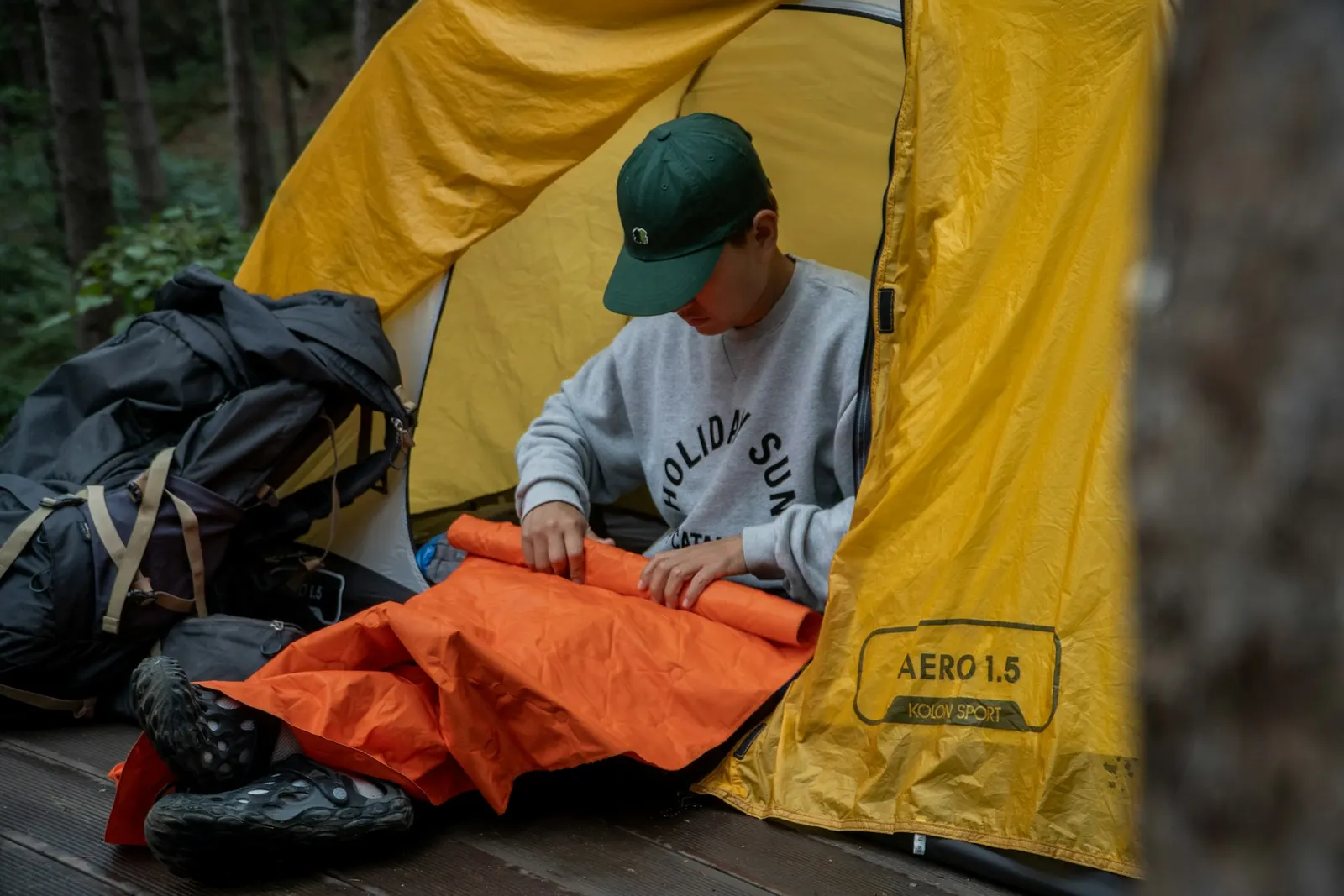
Many campers blame a cold night on their sleeping bag, but the real culprit is often the ground. When you lie down, your body weight compresses the insulation in your sleeping bag underneath you, so it does very little. Your sleeping pad does the real work of keeping cold ground from drawing heat away. In Canada, where nights can dip toward freezing in June on the Shield and in September in the mountains, choosing the right pad matters.
What is R-value?
A pad's R-value measures its resistance to heat flow — in other words, how well it insulates you from the ground. Higher numbers mean more insulation.
Since 2020, many major manufacturers test pads using a common standard, ASTM F3340, which makes R-values easier to compare between brands. When shopping, look for pads tested to this standard.
| R-value (approx.) | Typical use |
|---|---|
| Under 2 | Warm summer nights only |
| 2 to 4 | Three-season camping in mild conditions |
| 4 to 5.5 | Cool shoulder seasons, nights near freezing |
| Above 5.5 | Cold conditions, frozen ground, winter camping |
These ranges are guidelines. People who sleep cold, or who are tired and under-fed after a long day, may want more insulation than the chart suggests.
Types of sleeping pads
Closed-cell foam
Simple foam pads, rolled or folded. They are inexpensive, durable and cannot puncture. R-values are usually modest, and they are bulky to carry. They make an excellent second pad for cold conditions.
Self-inflating pads
Open-cell foam inside an airtight shell. Open the valve and the foam expands, drawing in air. They balance comfort, warmth and durability, but are heavier and bulkier than many air pads. Popular for car camping and canoe trips.
Air pads
Inflatable pads, often with internal insulation or reflective layers. They pack small, can be very comfortable and some have high R-values. Downsides: they can puncture, and they need inflating — use a pump sack rather than breath in cold weather to reduce moisture inside.
R-values are additive. A foam pad under an air pad gives you the warmth of both and protects the air pad from punctures. In shoulder season, this simple combination is one of the most reliable ways to sleep warm.
Choosing for Canadian conditions
- Summer lake trips (July–August): a three-season pad is usually enough, though northern lakes and mountain parks can still have cold nights.
- Spring and fall: look for higher R-values, or carry a foam pad to add underneath.
- Mountain parks: at higher elevations, frost is possible any month. Plan for cold.
- Canoe trips: weight and bulk matter less than on backpacking trips, so a thicker self-inflating pad or a two-pad system is practical.

Comfort and fit
Warmth is not the only consideration. If you are uncomfortable, you will not sleep well regardless of R-value.
- Width: wider pads stop your arms from sliding off onto the cold floor.
- Length: a full-length pad insulates your feet; short pads save weight but leave you exposed.
- Thickness: side sleepers usually need a thicker pad to keep hips off the ground.
- Noise: some air pads crinkle — try before you buy if possible.
Buy the pad for the coldest night you expect, not the warmest one you hope for.
Sleeping warm: beyond the pad
- Eat and drink before bed: a warm, fatty snack fuels your body through the night.
- Change into dry clothes: damp clothing steals heat. Keep sleep clothes dedicated and dry.
- Wear a toque and dry socks to bed.
- Use a hot water bottle: fill a sturdy, leak-proof bottle and tuck it in your sleeping bag.
- Vent the tent: condensation makes everything damp. Crack the vents even on cold nights.
- Get up to pee: your body wastes energy keeping a full bladder warm.
Caring for your pad
- Carry a repair kit for air and self-inflating pads, and know how to use it.
- Clear sticks and sharp stones from the tent pad before pitching.
- Store self-inflating pads unrolled with the valve open at home to preserve the foam.
- Dry your pad fully after trips to prevent mildew inside.
For more ways to stay cozy in poor weather, see our rainy-day camp hacks.
A two-pad system for shoulder season
If you camp from May through October, one pad rarely covers every night perfectly. Many Canadian trippers settle on a simple two-pad system that adapts to the season:
- Base layer: a thin closed-cell foam pad that lives in the canoe all season. It doubles as a sit pad at lunch, a kneeling pad while paddling and an insurance policy if your air pad leaks.
- Main pad: a three-season air or self-inflating pad with a moderate R-value, comfortable enough for warm July nights on its own.
- Combined: on cold nights, put the foam pad underneath. The combined R-value handles frosty September mornings without buying a dedicated winter pad.
This approach also spreads your budget sensibly. A good foam pad is inexpensive, and it protects the more expensive pad from sharp roots and rocks that are common on Shield campsites.
Pads for children
Children lose heat quickly and often roll off their pads during the night. Give them a pad that covers their full length, consider a foam pad underneath, and put a familiar blanket over their sleeping bag on cold nights. A sleeping bag with a pad sleeve keeps everything together.
Testing before the trip
Sleep on a new pad at home or in the backyard before a trip. You will learn how firm you like it, how long it takes to inflate and whether it slides on your tent floor. A thin non-slip mat underneath can stop the midnight slide toward the tent wall.
Key takeaways
- Your pad, not just your bag, determines how warm you sleep.
- Look for pads tested to the ASTM F3340 standard to compare R-values.
- R-values add together when you stack pads.
- Plan for the coldest likely night and combine a good pad with dry clothes and a warm snack.
Sleeping pad FAQ
Can I use an air mattress for camping?
Thick, uninsulated air mattresses feel comfortable but can be very cold, because the air inside circulates and carries heat away. If you use one, put a foam pad or blanket on top.
Do I need a winter-rated pad for fall camping?
Not necessarily. A three-season pad combined with a foam pad underneath is often enough for shoulder-season trips.