
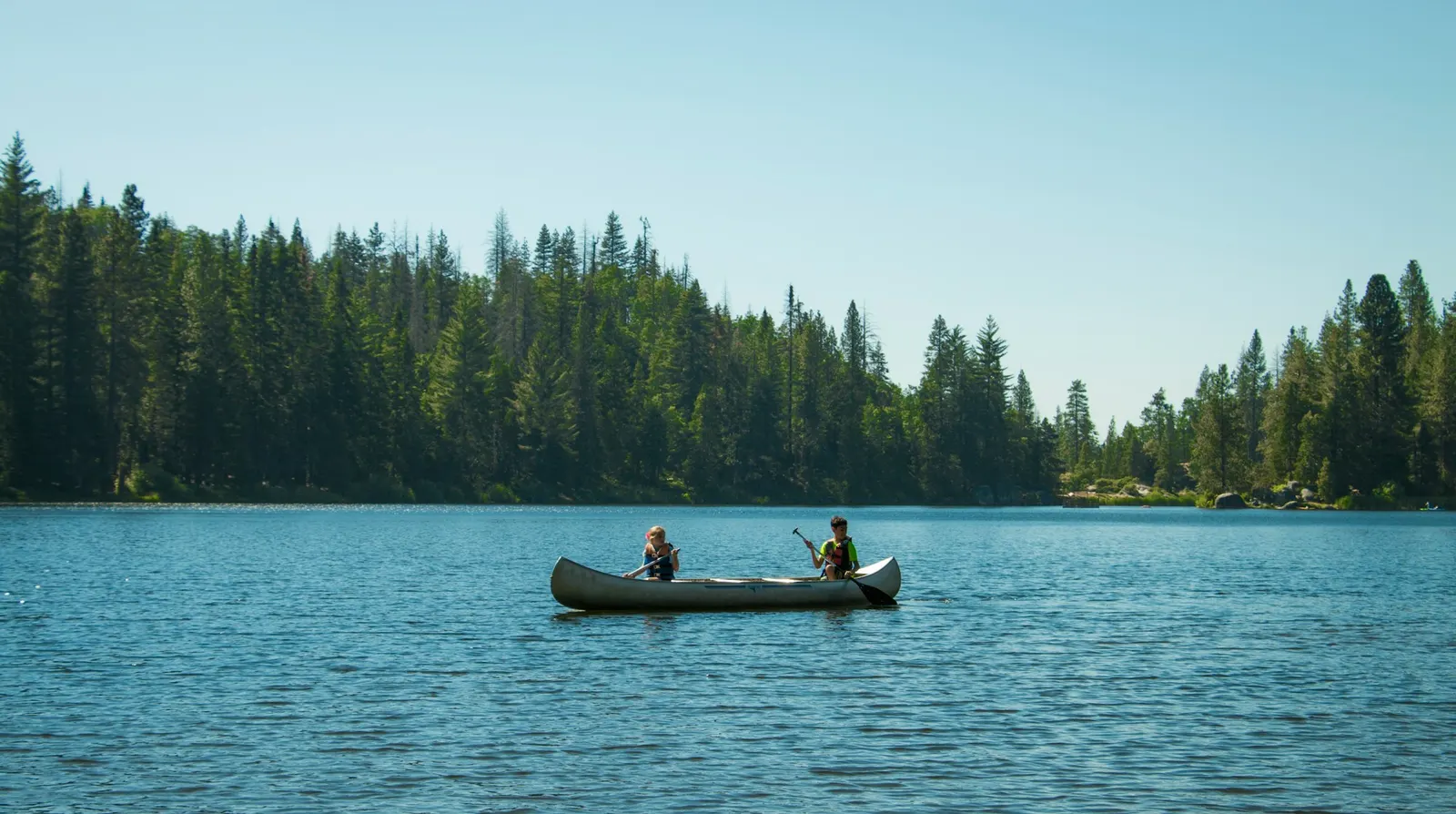
Canoe camping is the oldest way to travel through Canada's lake country, and it remains one of the most rewarding. A canoe can carry far more than a backpack, which means real food, a comfortable sleep system and a camp chair can all come along. In exchange, you trade trail miles for open water, wind and the occasional portage. This guide walks through the decisions that shape a good trip, whether you are eyeing a weekend loop in Algonquin, a week among the white quartzite hills of Killarney, or a paddle down Maligne Lake in Jasper.
Why travel by canoe?
The appeal is partly practical and partly about pace. On a lake you move at roughly four kilometres an hour, slow enough to watch a loon dive and resurface, quick enough to cover fifteen or twenty kilometres in a relaxed day. Paddle-in campsites tend to be quieter than drive-in campgrounds, and many sit on points or islands with their own swimming rock.
- Capacity: a tandem canoe comfortably carries two people and gear for a week, so you can bring fresh food for the first days and a proper kitchen.
- Access: many of the most beautiful campsites in provincial and national parks can only be reached by water.
- Flexibility: on interconnected lake systems you can shorten or extend a route as weather and energy allow.
Choosing a route
Most canoe routes in Canada are described as a series of lakes joined by portages. Park maps, outfitter maps and official route guides list portage lengths, campsite locations and access points. When you lay out a route, look at three things beyond total distance.
1. Portage count and length
A ten-kilometre day with no portages feels very different from a ten-kilometre day with four carries. Algonquin maps traditionally show portages in metres, and you will also hear older trippers talk about "rods" (a rod is about five metres). As a rule of thumb, first-timers are happiest with one or two short portages per day and a total under one kilometre of carrying.
2. Wind exposure
Big lakes are where trips go sideways. Prevailing winds in much of Canada blow from the west or southwest, and afternoon winds usually build. Long, open stretches running in the direction of the wind can produce whitecaps quickly. Prefer routes where you can follow a sheltered shoreline, and plan big crossings for early morning when water is often calm.
3. Campsite density
In busy parks, a lake with only two or three sites can fill up by mid-afternoon in summer. Where campsites are assigned by lake or zone on your permit, stick to the plan; where they are first-come, build in a backup lake.
A realistic daily rhythm
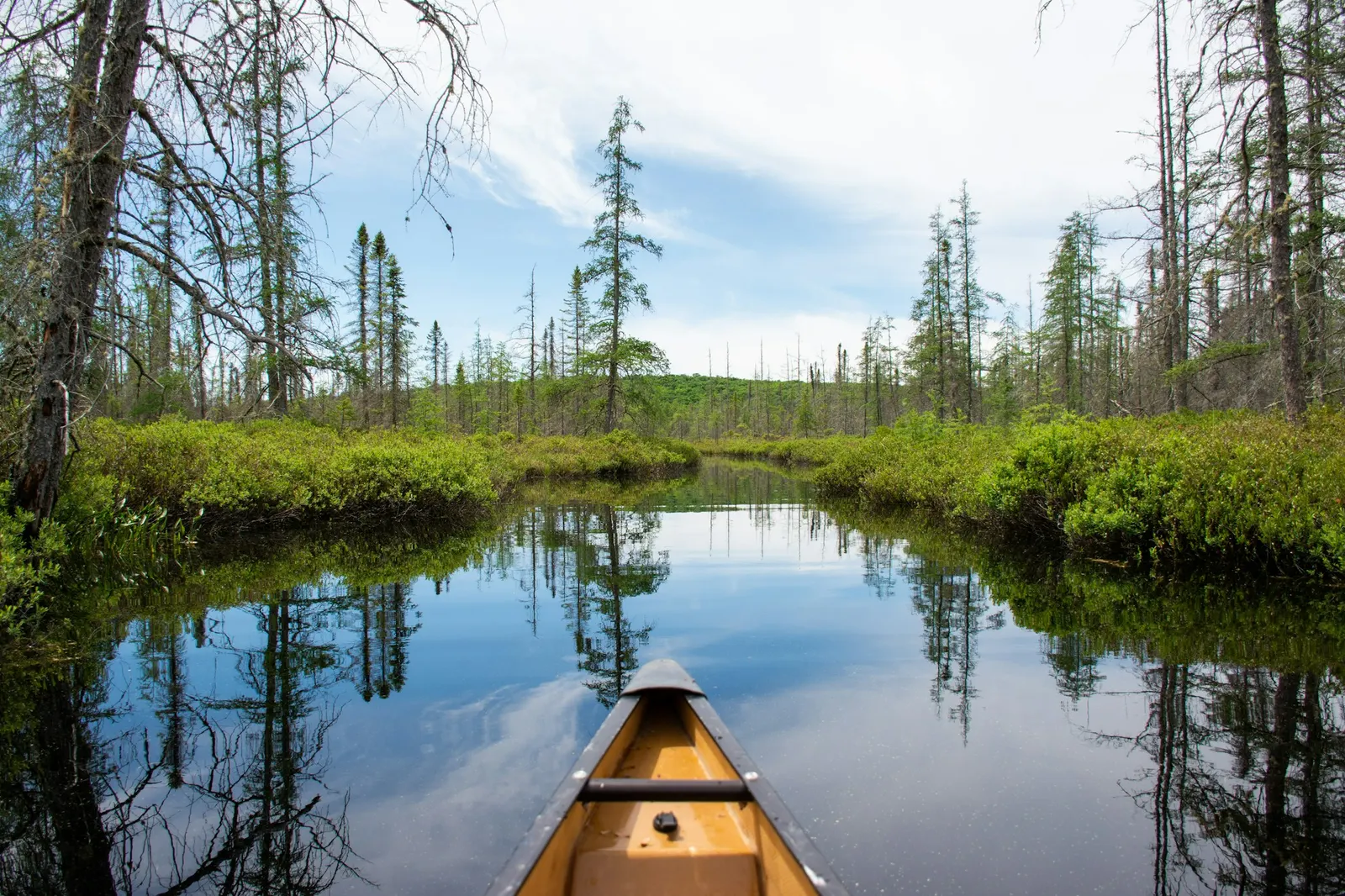
New paddlers often over-plan distance and under-plan time. A day on the water includes breaking camp, loading the canoe, snack stops, a lunch break, portages, and setting up again. A comfortable rhythm looks something like this:
- Early start: coffee and a quick breakfast, then on the water while the lake is glassy.
- Morning paddle: tackle the biggest crossings and longest portages before the wind builds.
- Long lunch: find a rock in the shade, swim, refill water and filter it.
- Short afternoon leg: aim to reach camp by mid-afternoon so you have choice of sites and time to dry out.
- Evening: hang or store food properly, cook, and watch the light change on the water.
For a first trip, plan for four to five hours of actual travel per day. You can always add a side trip if you arrive early.
On trips of four nights or more, build in one day where you do not move camp. It gives you a buffer for wind-bound days, and it is often the day people remember most: fishing, swimming, reading, or exploring a nearby lake with an empty canoe.
Gear that matters most on the water
Every canoe tripper eventually develops a personal list, but a few items carry more weight than the rest.
Required safety equipment
Transport Canada sets minimum safety equipment for human-powered craft. For a canoe, that includes a properly fitting, Canadian-approved lifejacket or PFD for each person on board, a buoyant heaving line at least 15 metres long, a bailer or manual pump, and a sound-signalling device such as a pealess whistle. If you paddle at night or in poor visibility, you also need a waterproof flashlight or navigation lights. Rules can change, so check the current Transport Canada guide before you go.
Comfort and efficiency
- A good paddle sized to your torso, plus one spare per canoe.
- Waterproof packs or a barrel for food (see our guide to packing a canoe barrel).
- A portage yoke or comfortable yoke pads if you will carry the canoe.
- Map in a waterproof case and a compass; a GPS device is a helpful backup, not a replacement.
- Sun protection: hat, sunglasses with a strap, and sunscreen. Reflected light on lakes is intense.
Reading water and weather
The single most important skill on a canoe trip is deciding when not to paddle. Watch for whitecaps, building swells and darkening skies to the west. Thunderstorms in summer can develop quickly in the afternoon; at the first rumble of thunder, head for shore, get off the water and wait at least thirty minutes after the last thunder before setting out again.
Cold water is the hidden hazard. Even in July, large northern lakes can be cold enough to cause cold shock if you capsize. Wear your PFD on the water rather than storing it under a thwart, keep crossings close to shore, and pack a dry change of clothes in a waterproof bag that is easy to reach.
A good day on the water ends with the canoe pulled up high, the food stored away from the tent, and nobody in a hurry.
Where to start in Canada
Classic canoe country stretches across the Canadian Shield and into the mountain parks. A few well-known starting points:
- Algonquin Provincial Park, Ontario: an enormous network of lakes and portages with many access points, from easy one-lake trips to multi-week loops.
- Killarney Provincial Park, Ontario: clear lakes framed by the white quartzite La Cloche ridges, with portages that are generally steeper and rockier.
- Jasper National Park, Alberta: Maligne Lake offers a long out-and-back paddle to backcountry campgrounds beneath mountain peaks, with cold water and changeable wind.
- La Mauricie National Park, Quebec: a friendly canoe-camping park with lakes linked by short portages.
Each park manages permits and reservations differently, so check the official park page well before your dates. Our post on reserving Parks Canada campsites covers the general process for national parks.
Leave No Trace on a canoe trip
Popular canoe routes see a lot of use, and the small habits of each group add up. Use established campsites and fire pits, keep washing water and soap at least 70 metres from the shoreline, pack out everything you bring including food scraps, and use the provided privy or a properly dug cathole well back from water. If the park has a can-and-bottle ban, as some Ontario parks do for backcountry areas, repack food into reusable containers before you leave home.
Before you go: a short checklist
- Permit or reservation confirmed and printed or saved offline.
- Trip plan left with someone at home, including your route and expected return time.
- Weather forecast and any fire restrictions checked the day before.
- Safety gear in the canoe, PFDs fitted and worn.
- Food stored in a barrel or bag that you can hang or keep well away from the tent.